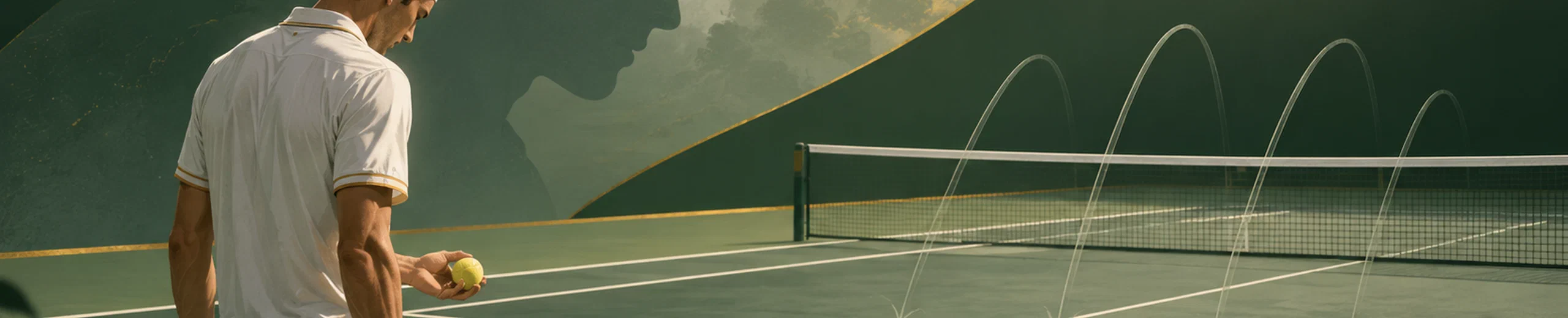
4 Double Faults


4 Double Faults
Four double faults can feel like a technical problem.
But sometimes the interesting part is not the serve.
It is what happens in the mind before the serve.
Defensive Pessimism
Defensive pessimism is a strategy where someone deliberately imagines possible negative outcomes before a performance.
That can sound unhelpful at first.
Why would thinking about failure ever improve performance?
For some people, however, anticipating what could go wrong can reduce uncertainty and turn anxiety into preparation.
When Worry Becomes Preparation
Imagine serving at an important moment in a tennis match.
You might think:
- What if I miss my first serve?
- What if I double fault?
- What if I tighten up?
- What if my opponent attacks my second serve?
Those thoughts can become distracting.
But they can also become useful if they lead to preparation:
- choose a higher-percentage target,
- add more spin,
- commit to a pre-serve routine,
- slow down between points,
- rehearse the second serve under pressure.
The important distinction is whether pessimistic thinking ends in rumination or in planning.
Four Double Faults
A run of double faults can quickly become psychological.
One mistake creates tension.
Tension changes movement.
The next serve feels less automatic.
Attention turns inward.
The player starts thinking about mechanics that would normally happen without conscious control.
And suddenly the problem is no longer just the serve.
It is the interaction between:
attention, anxiety, expectation, and movement.
Defensive Pessimism vs Optimism
Sport psychology often celebrates confidence and positive thinking.
Those can be useful.
But not every athlete performs best by telling themselves everything will be fine.
For some people, a more effective strategy may be:
What could go wrong, and what will I do if it does?
That is different from expecting failure.
It is using uncertainty as information.
The Practical Question
The goal is not to eliminate nervous thoughts.
The goal is to decide what to do with them.
If thinking about a double fault makes you more tense, the thought is probably not helping.
If it reminds you to breathe, choose a larger target, use more spin, and commit to your routine, it may have become useful preparation.
That is the interesting part of defensive pessimism:
the negative thought is not necessarily the problem. What matters is what happens next.
